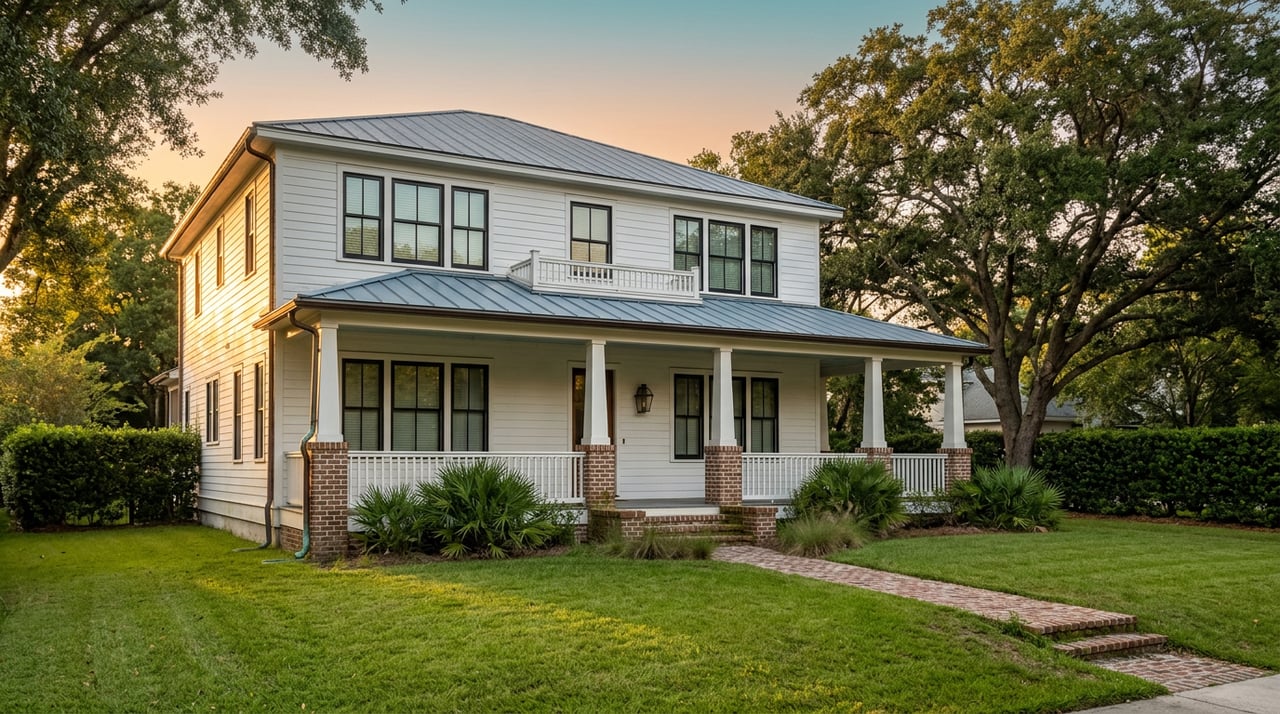
The Hampstead Bypass Slipped a Year, and Nobody Updated the Listings
September 24, 2026
September 24, 2026
"It would literally just free me up from being a full-time tourist in my own neighborhood."
That's how Hampstead resident Paul Lutz described life along U.S. 17 to WECT this past February. He wasn't exaggerating for effect. Ask anyone who lives along U.S. 17 between Sloop Point Loop Road and the Topsail High School area how it feels to run an errand at 4:45 on a Tuesday, and you'll hear some version of the same thing: the corridor works fine until it doesn't, and then it doesn't for a while.
The fix everyone's been waiting on is the Hampstead Bypass, and if you've spent any time researching a move here, you've probably seen a completion date attached to it. The trouble is that the date depends entirely on which page you land on, and the most commonly repeated one is no longer accurate.
Search "Hampstead bypass completion date" and you'll surface a small pile of conflicting information, all of it published in good faith at the time:
| Source | Date given | Published |
|---|---|---|
| Original NCDOT construction contract with Conti Civil LLC | Northern section open to traffic by fall 2026 | Awarded January 2022 |
| Local roundup covering back-to-school construction | Phases beginning 2026, full project into 2028 | August 2025 |
| NCDOT engineer Brad Haste, quoted directly by WECT | Northern section complete "first part of summer 2027"; full project 2030 | February 2026 |
Port City Daily's coverage from late May 2026 lines up with that third figure, reporting that the first segment, running from N.C. 210 to Sloop Point Loop Road, is on track to open in late 2027, with the full 12.6-mile bypass wrapping in 2030. That's the most current confirmation available, and it comes straight from the agency building the road.
None of these sources got it wrong exactly. Contracts get awarded with target dates, roundups summarize what's publicly known at the time, and timelines on an infrastructure project this size shift as segments hit different stages of drainage work, bridge construction, and utility relocation. But if you're using "2026" to decide how much traffic noise you're willing to live with for the next year, you're planning against a number the state itself has already moved past.
The bypass is really two separate builds that happen to share a name.
In practice, that means the interchanges NCDOT has flagged for this stretch, at N.C. 210, Hoover Road, and U.S. 17 north of Vista Lane, are still mid-build. NCDOT told WECT in February that crews would begin drainage work near Sloop Point within six to twelve months, including a shift of southbound U.S. 17 onto a new alignment, so drivers on this corridor should expect to see that play out sometime between now and early 2027.
If you're comparing homes right now, the bypass timeline isn't background trivia. It's one of the variables that separates two otherwise similar properties.
A resale home directly on the current U.S. 17 corridor, close to the businesses and intersections the bypass is designed to relieve, is going to carry more day-to-day traffic noise and slower cross-town trips for longer than a lot of buyers assume. That's not a reason to rule it out. It's a reason to weigh it with the real date in mind rather than the one still printed on older marketing.
New construction pulls in the opposite direction. Communities like Bridgewater Landing, WyndWater, Sawyers Run, East Wynd, and Harbour at Summerset sit further from the immediate corridor congestion, and several are already marketing proximity to the bypass path as a selling point. That's a fair thing to value. It's just worth remembering that "near the bypass" and "relieved by the bypass" aren't the same claim until Segment B is actually carrying traffic, which won't happen before summer 2027 at the earliest.
Either way, the honest version of this decision isn't "wait for the bypass" or "ignore the bypass." It's pricing in the better part of another year of construction-adjacent driving beyond what that original 2026 date implied, and deciding whether that trade-off still works for the home, the lot, and the commute you actually have.
The traffic story and the price story are two different things, and it's worth keeping them separate.
Market tracking through late August 2026 put Hampstead's trailing twelve-month median sold price at $420,000 across 245 tracked closings, with a median of $219 per square foot on the 244 of those sales with usable square footage data. The middle half of those sales closed between $321,894 and $649,500, a wide enough band that a single median tells you very little about what a specific street or community will actually cost.
Weekly local market snapshots earlier this year showed Hampstead carrying more than 200 active listings with an average of around 101 days on market, a pace that gives buyers real room to compare corridor location against build quality without feeling rushed into an offer. That's useful context if you're weighing a resale home against a new-construction lot: nobody needs to make a bypass-timeline decision under pressure right now.
For sellers along the current U.S. 17 corridor, the practical takeaway is similar. Buyers researching Hampstead are going to find the same conflicting dates you did, and the ones who've done their homework will ask about construction noise and access before they ask about square footage. Having a straight answer ready, rather than pointing back to a 2026 completion date that's no longer accurate, tends to build more trust than it costs.
Is the Hampstead Bypass still on schedule to finish in 2026? No. NCDOT told WECT in February 2026 that the northern section, the one closest to the current traffic bottleneck, is now targeted for the first part of summer 2027. The full 12.6-mile project is expected to be complete in 2030.
Which part of the bypass actually relieves the traffic residents deal with today? Segment B, running from N.C. 210 north past Hampstead, is the section most directly tied to the U.S. 17 congestion near Sloop Point and Topsail High School. It's also the section furthest along, at roughly 65 percent complete as of February 2026.
Does this mean buying near the current corridor is a mistake? Not necessarily. It means the traffic and noise conditions you see today are a reasonable baseline for at least the next year, rather than a temporary state about to end. Some buyers are fine with that trade-off for the location, price, or lot; others will prefer a new-construction community further from the active work.
Should I wait until the bypass opens to buy in Hampstead? That depends on your own timeline more than the project's. With homes currently taking around 100 days to sell and a wide range of prices across the area, there's no single answer that fits every buyer. It's worth talking through your specific priorities, whether that's proximity to Topsail Island, distance from construction, or resale value once Segment B opens.
If you're weighing a home in Hampstead against the real construction timeline rather than the one still floating around online, Jennifer Bullock Team can walk through what a specific street, lot, or community looks like right now, and what it's likely to look like once the bypass actually opens. Reach out for a free home valuation, or just a straight conversation about timing.
Stay up to date on the latest real estate trends.


By combining deep-rooted local knowledge with modern marketing execution, the Bullocks deliver a refined, results-driven approach to luxury real estate. Their collaborative style, strong work ethic, and commitment to excellence have made WilmingtonLuxuryHomes.com a trusted destination for buyers and sellers seeking top-tier representation in Wilmington, NC and the surrounding Cape Fear coastal communities.