The Wilmington Historic District Market Slowed Down. The Approval Clock Never Does.
August 13, 2026
August 13, 2026
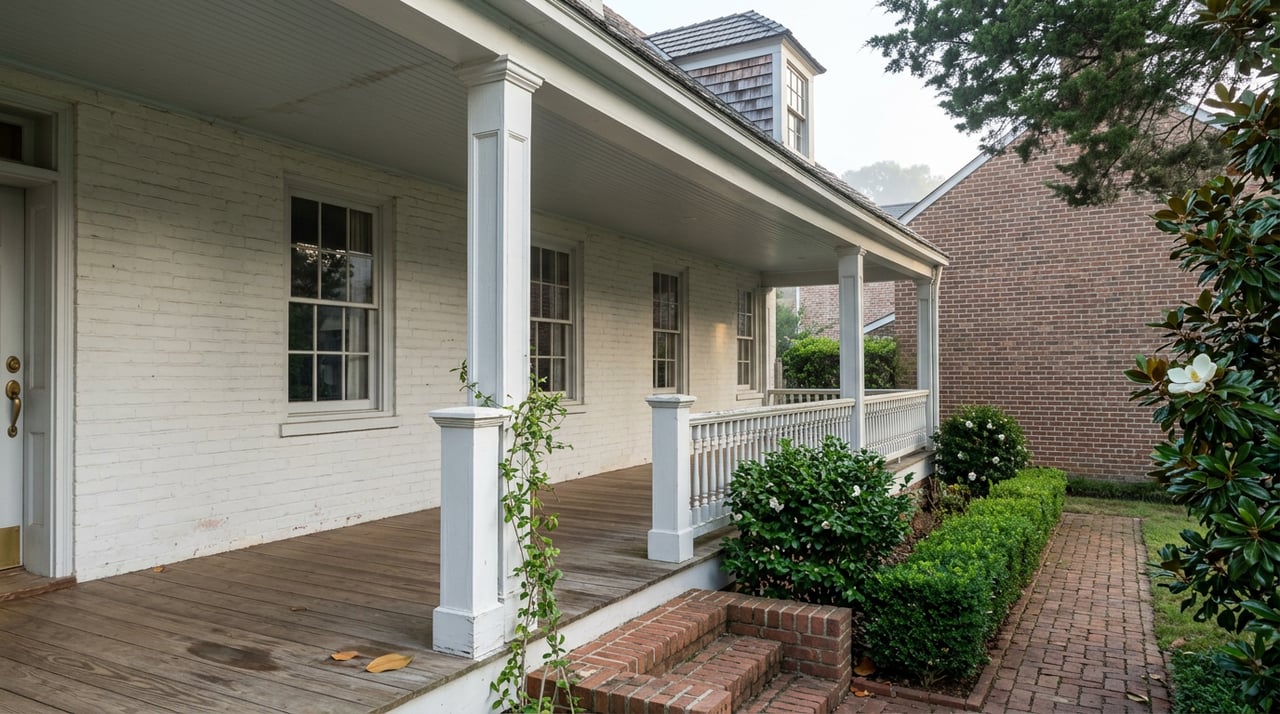
On March 12, 2026, the Wilmington Historic Preservation Commission sat down for an evidentiary hearing on a four-square house at 226 South Front Street, a hip-roofed home with a hipped dormer and a porch carried on paneled columns, documented in city survey records tracing back to a 1974 listing. The property sits inside the Central Business District-Historic District Overlay, and its paper trail goes back further than most buyers expect: a certificate to demolish the house in 2008, another certificate to demolish it in 2014, an after-the-fact fix for unpermitted porch underpinning in 2017, and a rear addition approved in 2024. The house is still standing. In 2026 its owner, an entity called Captain John Enterprises LLC, came back for one more round of review on a major rehabilitation and rear addition, with the city's project planner Benjamin Riggle handling the case.
That file is worth sitting with before you write an offer on anything downtown. It shows what actually governs a historic Wilmington property once you own it, and that system runs on a calendar that has nothing to do with how fast or slow the market feels when you're shopping.
Over the three months ending in May 2026, the median sale price for a home in Wilmington closed at $479,000, up 5.4 percent from the same stretch a year earlier, while the average time to sell more than doubled, moving from 24 days to 57 days. A separate July 2026 snapshot of active and pending listings told a slightly different story, putting the typical active listing at 32 days old with a pending-to-active ratio suggesting brisk absorption. A third measure, tracking typical home value rather than closed transactions, put time to pending around 14 days.
Three numbers, three different slices of the same city, three different answers to "how fast is this market." That's not a contradiction to resolve. It's the first lesson: what a market is doing depends entirely on what you choose to count.
| What you're measuring | What it shows |
|---|---|
| Time from listing to closed sale (3 months through May 2026) | 57 days, up from 24 a year earlier |
| Median age of an active listing (July 2026 snapshot) | 32 days |
| Time from listing to pending contract | around 14 days |
None of those numbers move the clock that governs what happens to a historic house after you buy it. That clock is set by state statute and a city commission, and it doesn't slow down when the market does, or speed up when it doesn't.
Any exterior change to a property inside one of Wilmington's local historic districts, from a new coat of paint on a facade element to a full addition, requires a Certificate of Appropriateness from the Historic Preservation Commission, a seven-member board appointed by City Council to review changes against the city's design standards. Interior work and routine maintenance don't trigger this review. Anything visible from the street usually does.
There are two tracks, and the gap between them is the whole point. Simple, minor work can be approved administratively by preservation staff, sometimes in as little as a week. Anything the commission considers major, structural changes, additions, or work that departs from the design standards, requires a public hearing before the full board. North Carolina's enabling statute for these commissions caps that process at 180 days from the date the application is filed, and that ceiling applies whether the surrounding market is moving in 24 days or 57.
A fast closing buys you the house. It does not buy you the schedule.
That's the practical meaning of the file at 226 South Front Street. The 2024 addition there went through the same review structure this year's rear addition proposal is going through now. The market outside changed considerably in that window. The review process did not.
Before you plan a renovation budget, it helps to know what the design standards will and won't let you propose. A few of the rules that show up repeatedly in commission case files:
None of this is a reason to avoid a historic property. It's a reason to know, before you're under contract, whether the work you're picturing falls into the fast administrative lane or the slow commission lane. That single distinction shapes your renovation timeline more than any market condition will.
Homes old enough to sit inside the National Register district frequently carry knob-and-tube wiring and cast iron plumbing, and both create a second timing problem that has nothing to do with the city and everything to do with your insurer. Standard admitted carriers commonly decline to write a policy on a home with active knob-and-tube wiring because of the fire risk from a missing ground wire. Rewiring an older home typically runs $5,000 to $10,000 or more depending on the size of the house.
If a full rewire isn't done before closing, buyers often end up in the excess and surplus insurance market, where coverage is available but at two to three times standard premiums, sometimes with a contractual requirement to complete the rewire within 90 days to a year. That's a second calendar running alongside the COA process, one your lender will care about before your closing date, not after. And failing to disclose that wiring to your insurer, if it's later discovered in a claim, can void the policy entirely.
The upside to all of this process is that North Carolina built a real financial incentive for owners willing to work inside it. Homeowners rehabilitating an owner-occupied historic property can claim a 15 percent state tax credit through the Rehabilitation Tax Credit Program, administered by the State Historic Preservation Office.
The mechanics matter more than the headline rate. The rehabilitation has to exceed $10,000 in expenses within a 24-month window to qualify at all. Eligible expenses are capped at $150,000 per parcel, which caps the credit itself at $22,500. The application runs in two parts, a Part A describing existing conditions and proposed work before you start, and a Part B documenting the completed project, and both are reviewed against the Secretary of the Interior's Standards for Rehabilitation, the same standards behind the city's own design rules. Costs tied to rehabilitating the existing structure generally qualify. Acquisition costs, new square footage, site work, and personal property don't. Unused credit can be carried forward for nine years.
The credit exists because the state assumes you'll be dealing with exactly the timeline this post describes. It's built for owners who file the paperwork, wait for the review, and do the work in a way that holds up to inspection, not owners racing a market clock that was never the one that mattered.
Do I need a Certificate of Appropriateness for work no one can see from the street? No. Interior work and routine maintenance don't require a COA. The review applies to exterior changes visible from the public right of way.
Can I count something like a mechanical upgrade toward the tax credit? Generally, costs tied to rehabilitating the existing structure are eligible. The credit excludes acquisition costs, added square footage, site work, and personal property. Confirm the specifics of your project with the State Historic Preservation Office before you build it into your budget.
What happens if I do exterior work without an approved COA? Depending on the severity of the unapproved work, the city can issue a stop-work order or a citation. It's a real cost, not a formality, and it's the fastest way to turn a slow process into an expensive one.
If you're weighing a specific downtown property and want to know its actual COA history before you write an offer, or you own a historic Wilmington home and want a clear read on what it's worth in today's market, our team can walk both sides of that conversation with you. Jennifer Bullock Team can help you get a Free Home Valuation and a straight answer on what a renovation timeline would really look like before you're under contract.
Stay up to date on the latest real estate trends.


By combining deep-rooted local knowledge with modern marketing execution, the Bullocks deliver a refined, results-driven approach to luxury real estate. Their collaborative style, strong work ethic, and commitment to excellence have made WilmingtonLuxuryHomes.com a trusted destination for buyers and sellers seeking top-tier representation in Wilmington, NC and the surrounding Cape Fear coastal communities.